
The World Map Changed. Safe Abortion Still a Challenge
Medically Reviewed by Dr. Devi (MBBS, MD)
Contents of This Post:
- The World Map Has Changed. For Millions of Women, Safe Abortion Access Still Has Not.
- But Actually, Even the Map Itself Just Changed — and That Says Everything
- The Numbers That Frame This Conversation
- Restriction does not eliminate abortion. It eliminates safety.
- Where the Map Still Has Blank Spaces
- What Restriction Really Looks Like in Practice
- When the Law Is Not the Only Barrier
- Voices Across Borders: When Women Choose to Travel for Safe Care
- American Hospital Bangalore: Where the World Comes for Safe, Legal, Confidential Abortion Care
- The Map Will Keep Changing. Women Deserve to Know Their Options Now.
The World Map Has Changed. For Millions of Women, Safe Abortion Access Still Has Not.
Open any geography textbook from thirty years ago. Half of what you read would be wrong today. Countries have unified. Others have split. Borders have moved. Governments have fallen and risen. The map humanity drew for itself has been redrawn, renegotiated, and revised more times in the past three decades than in the three centuries before it.
And yet, one reality has stayed stubbornly in place for hundreds of millions of women across the world: the right to make a safe, legal decision about abortion still depends entirely on where they were born or where they currently reside.
In some countries, that abortion rights are expanding. In others, they are shrinking. Surprisingly, in many, they never existed at all. The result is a world where your geography determines your safety — where your passport and your postal code shape what choices you can make and whether exercising abortion, one of the most personal decisions of your life will happen in a clinic or in secret.
This post is about that world. It is about the progress made, the ground that remains uncovered, the very real human cost of unsafe abortion, and the role that education, access, and compassionate care can play in changing outcomes for women everywhere. It is also about what is possible right now — for women looking for safe, legal, and confidential abortion, no matter where they are coming from.
But Actually, Even the Map Itself Just Changed — and That Says Everything
While we talk about the world map changing through geopolitics and shifting borders, a quieter but equally striking shift is happening in how the world map is literally drawn.
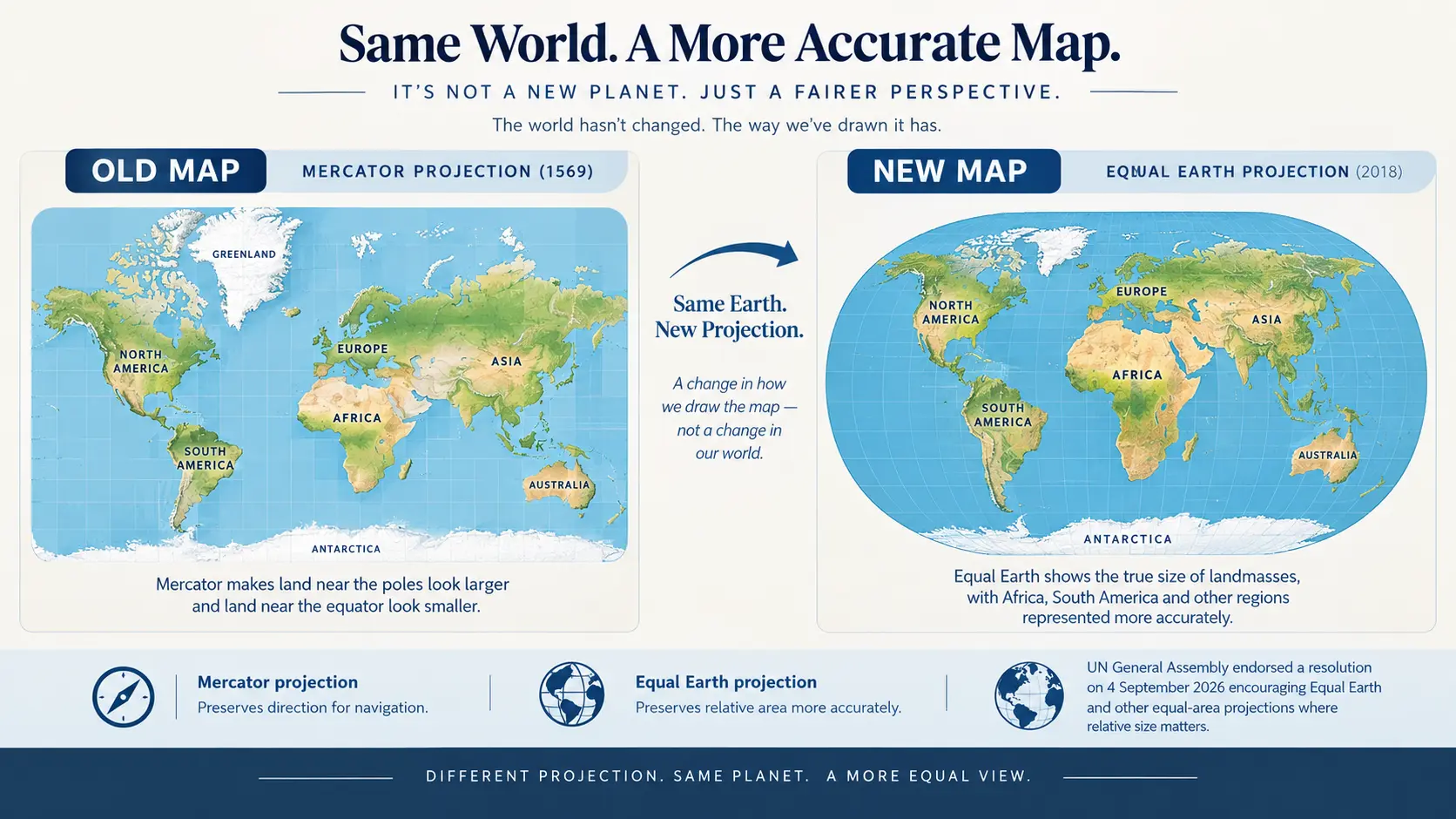
The United Nations (UN) recently endorsed a resolution encouraging nations to adopt the Equal Earth projection over the Mercator projection — the map that has hung on classroom walls, appeared in textbooks, and shaped how billions of people visualise the world since 1569. [1]
Here is what the difference actually means. Flemish cartographer Gerardus Mercator created the Mercator map at a time when European nations were actively colonising much of the world. To flatten a spherical globe onto a flat page, it stretched landmasses near the poles and compressed those near the equator. The result was a map that made countries like the United States, Russia, and much of Europe look dramatically larger than they are — and made Africa look smaller than Greenland. In reality, Greenland could fit inside Africa approximately 14 times over. Europe, which Mercator’s map portrays as larger than South America, is actually roughly half its size. [1]
The Equal Earth projection corrects this. It restores the true scale of the world — making Africa as vast as it actually is, shrinking Europe and the US to their accurate proportions, and centring the map not around the visual dominance of the West, but around the truth.
Now here is the connection that we find impossible to overlook. (Abortion access across the world)
The Mercator map told a visual story: some places are bigger. Some are more central. Some matter more. It was never true — but it shaped how the world was perceived for over 450 years. Advocates from African countries and the developing world pushed specifically for the Equal Earth correction, arguing that the distorted map reinforced the perception that their nations — and by extension, their people — were smaller, less significant, less worthy of attention. [1]
The global story of abortion access has told an eerily similar story. The countries that appeared largest on Mercator’s map — in Europe and North America — were generally the first to develop safe, legal reproductive healthcare frameworks. Also, the countries that the Mercator projection shrank — across sub-Saharan Africa, South Asia, and Latin America — are precisely the regions where unsafe abortions are most common today and where women face the highest risk of death and complications from inadequate access.
The Equal Earth map is a correction. Long overdue. Necessary. And the global push toward universal access to safe reproductive healthcare is another correction — equally long in coming, equally essential. The new world map shows a fairer perspective over the older version. But abortion access is still unfair for women in different parts of the world.
Both are happening. Neither is complete. But when we talk about the world map changing, this is the version of that change that matters most: not just the borders and the country names, but the recognition — finally — that every part of the map holds lives that deserve equal consideration.
The Numbers That Frame This Conversation
Before looking at individual countries, the global picture deserves attention — because it is staggering.
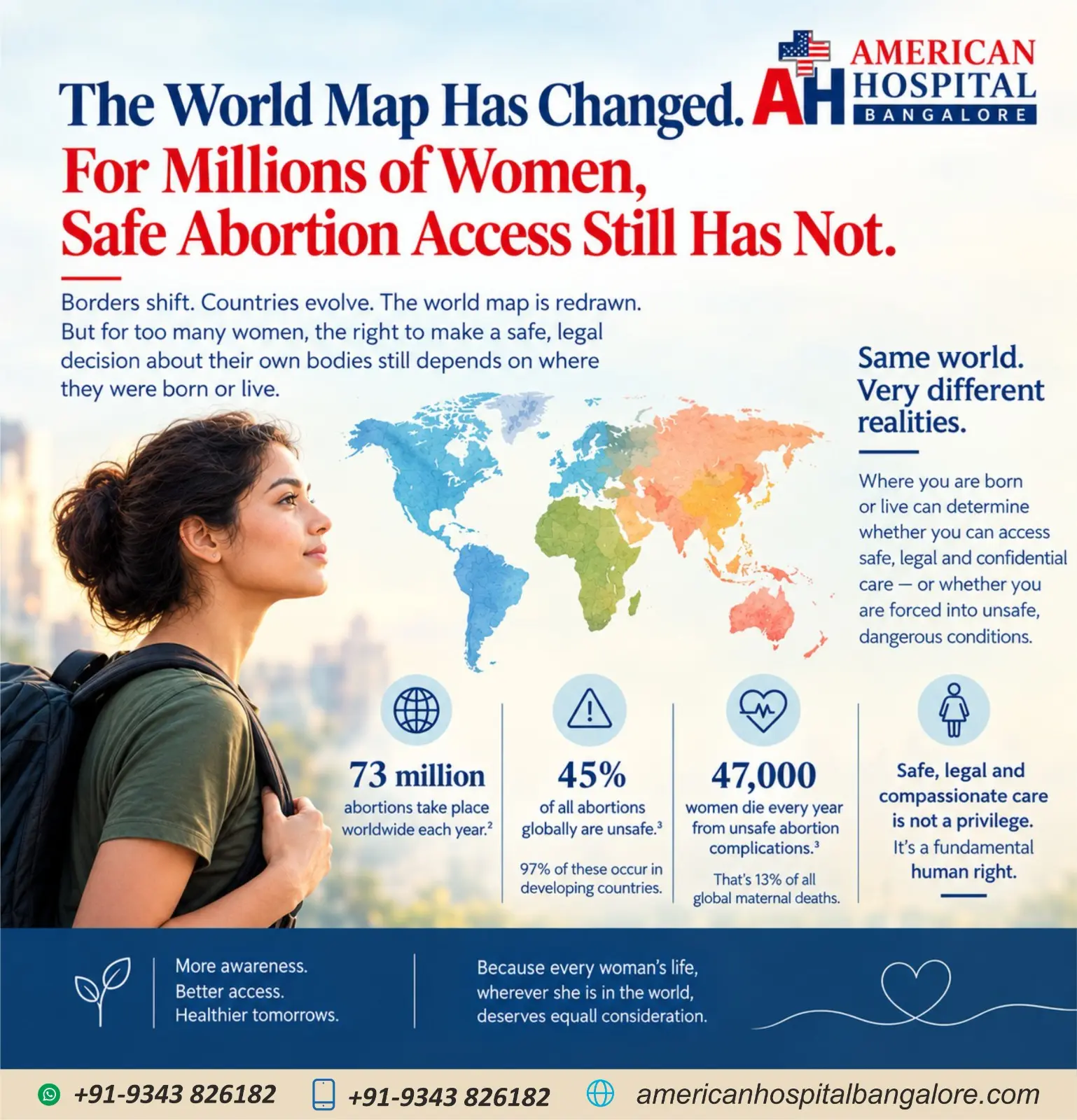
Each year, approximately 73 million abortions take place worldwide. [2] That number has remained relatively consistent since 1990. What has not stayed consistent is the split between safe and unsafe procedures — and that split is defined almost entirely by law and access.
Unintended Pregnancies
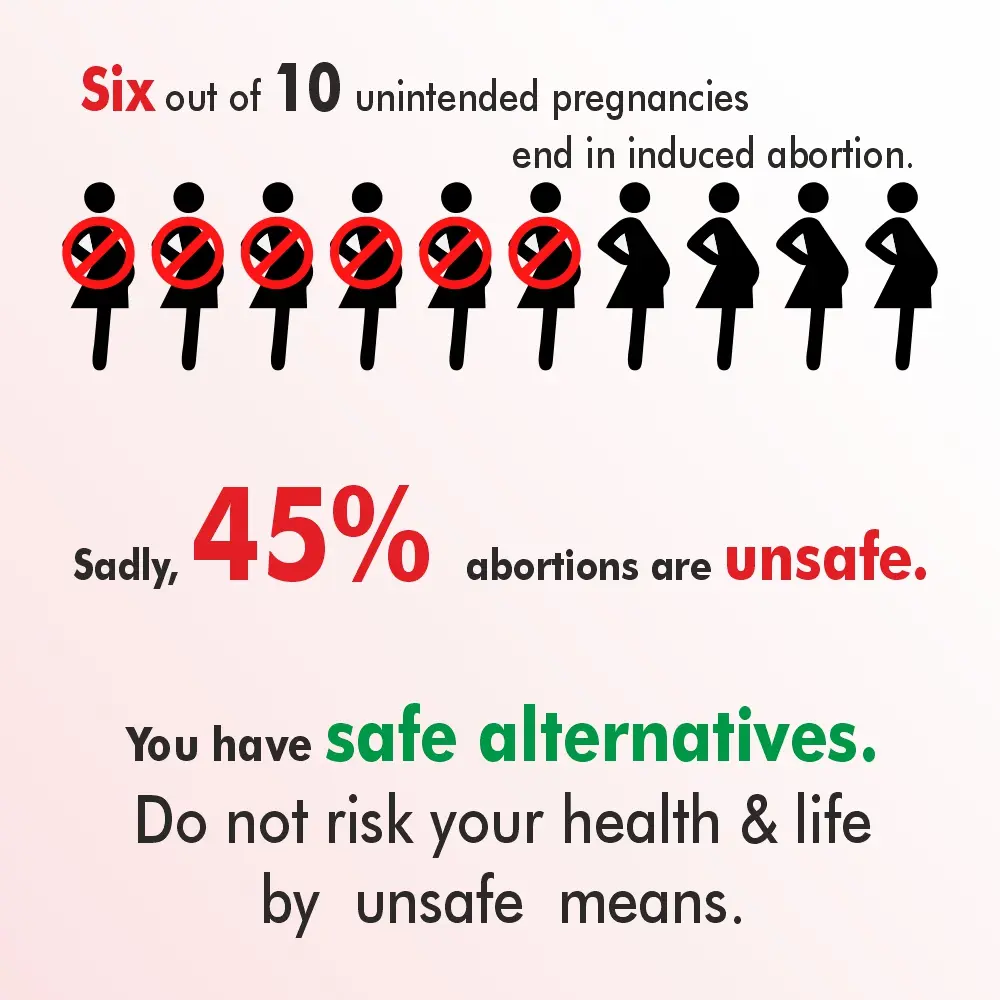
Around 45% of all abortions globally are unsafe, with 97% of these occurring in developing countries. Approximately 47,000 women die every year from complications related to unsafe abortion — accounting for 13% of all global maternal deaths. [3]
More than half of all unsafe abortions occur in Asia, primarily in South and Central Asia. [4] In sub-Saharan Africa, unsafe abortion accounts for as much as 25% of all maternal deaths. Women between the ages of 15 and 19 face a 2.5 times higher risk of unsafe abortion-related complications than older women. [5]
And critically — for anyone who assumes that restricting abortion reduces its occurrence — the data says otherwise. Between 1990–94 and 2015–19, the abortion rate in countries with broadly legal access declined by 43%. In countries with severe restrictions, it increased by approximately 12% over the same period. [6]
Restriction does not eliminate abortion. It eliminates safety.
The Map Is Being Redrawn — and the Direction Is Clear
The past decade has seen meaningful, sometimes historic shifts in how countries approach abortion access. Change has come from courts, from parliaments, from referendums, and from sustained grassroots movements that refused to accept the status quo.
Firstly, Ireland made global headlines in 2018. A country long defined by the weight of its Catholic heritage voted in a landmark referendum — with a resounding 66% majority — to repeal a constitutional ban that had stood for decades. Women who had previously been forced to travel abroad for terminations finally had access to safe, legal care at home.
Secondly, Argentina followed in December 2020, when Congress voted to legalise abortion up to 14 weeks for any reason. This was the result of years of campaigning by the Green Wave (marea verde) movement, whose green scarves became the emblem of reproductive rights across Latin America. Since then, Mexico and Colombia have also decriminalised the procedure — meaning three of the four most populous countries in Latin America have now done so within just a few years. [7]
Next, Colombia moved furthest, making abortion legal on demand up to 24 weeks in February 2022. South Korea’s Constitutional Court declared its abortion ban unconstitutional in 2019, effectively decriminalising the procedure by 2021. New Zealand removed abortion from its Crimes Act entirely in 2020, treating it as a health matter rather than a criminal one. Thailand expanded legal grounds in 2021 to allow abortion up to 12 weeks. [8]
Most recently, France became the first country in the world to enshrine the right to abortion in its constitution in March 2024 — a landmark signal that reproductive rights can be elevated not just to legal status, but to permanent constitutional protection. [9]
Abortion Law in India
Now, closer to home, India’s MTP Amendment Act 2021 brought significant and welcome reforms: extending the gestational limit to 24 weeks for specific categories including survivors of rape and sexual assault, minors, differently-abled women, and women who experience a change in marital status during pregnancy. It also extended abortion access to unmarried women on the grounds of contraceptive failure and introduced a statutory confidentiality clause protecting patients’ identities. [10]
So, in the last thirty years, more than 60 countries have changed their abortion laws — and almost all of them have expanded access. [11] The map is changing. Although slowly, imperfectly, but unmistakably.
Where the Map Still Has Blank Spaces
Progress on one side of the map does not fill the silences on the other.
There are 24 nations worldwide where abortion is completely prohibited — with no exceptions for rape, incest, or the health of the mother. These include Malta and Andorra in Europe, Senegal and Egypt in Africa, and the Philippines and Laos in Asia. [12]
Middle East
Firstly, across much of the Middle East and Gulf region, access remains tightly restricted. Most countries permit termination only to save the mother’s life or in cases of severe foetal abnormality confirmed within a narrow gestational window. Even the UAE’s recent abortion law update — Cabinet Resolution No. 44 of 2024, which expanded permissible grounds to include pregnancies resulting from rape, incest, or mutual spousal request — still requires approval by a specialised medical committee and does not offer broadly accessible, on-demand abortion care. [13]
South Asia
Across the South Asian island nations — the Maldives and Sri Lanka among them — abortion is legally available only in the most narrow medical circumstances, leaving the overwhelming majority of women without any realistic access to safe and legal pregnancy termination.
And then there is the United States — perhaps the most striking recent example of how rapidly progress can reverse. The Supreme Court’s 2022 ruling in Dobbs v. Jackson Women’s Health Organisation removed nationwide constitutional protections for abortion rights. Since then, 14 states have imposed near-total bans, cutting abortion access in those states by 59%. [14]
Only 34% of women of reproductive age worldwide currently live in countries where abortion is available on demand. That means nearly two-thirds of the world’s women of reproductive age live under restricted, conditional, or absent access. [15]
What Restriction Really Looks Like in Practice
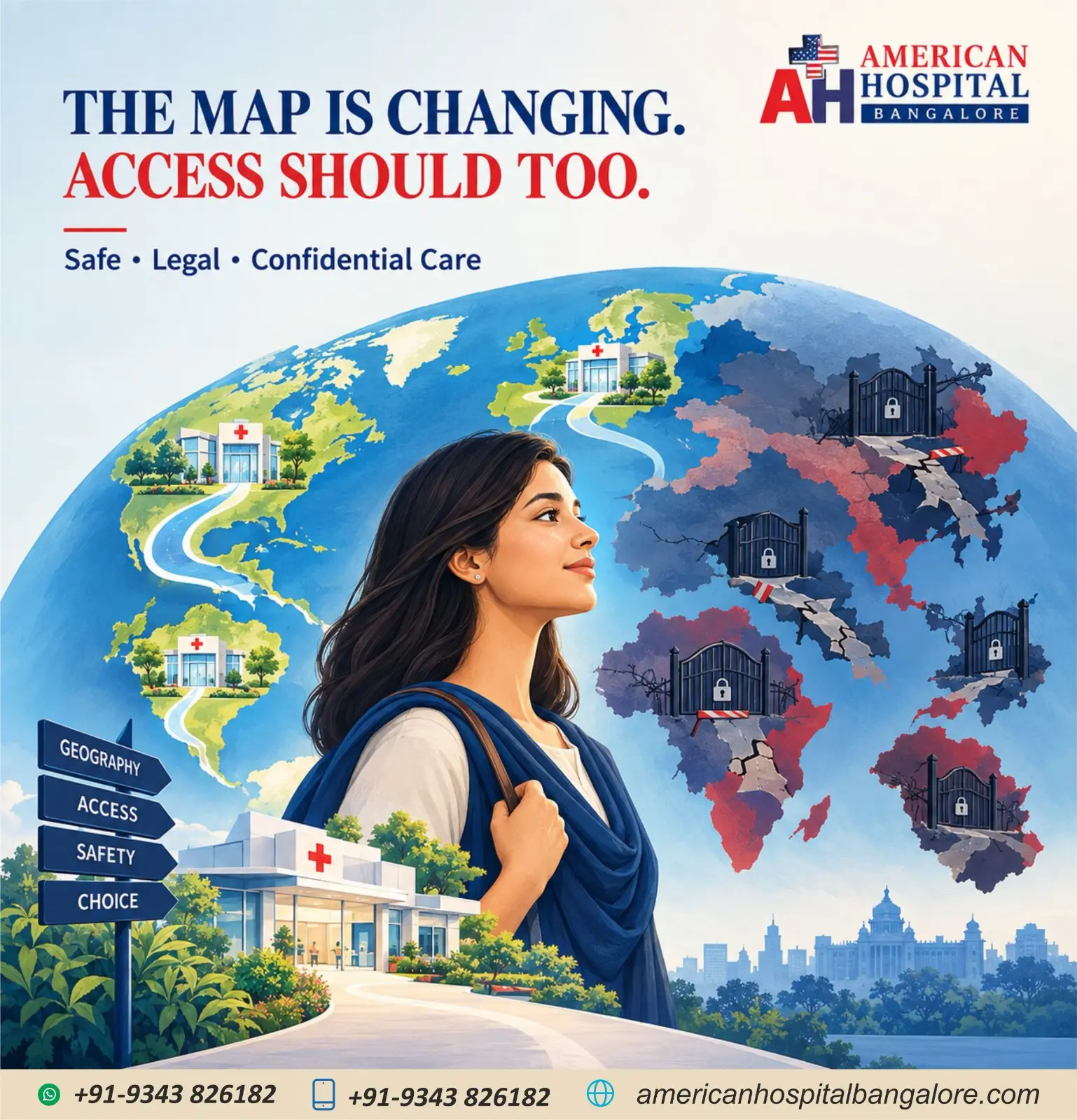
When women cannot access safe, legal abortion — they do not simply stop seeking one.
They turn to unqualified practitioners. To self-administered substances purchased without prescription. To procedures performed in unhygienic conditions with no trained support. The consequences span the full spectrum from infection and severe internal bleeding to permanent organ damage, infertility, and death.
Unsafe abortion results in an estimated 5 million non-fatal complications annually, including infections, haemorrhage, and organ damage. [16] In countries where abortion is restricted, maternal mortality rates are 2 to 3 times higher than in countries with more permissive laws. Access to safe abortion services, by contrast, is associated with a 44% reduction in maternal mortality ratios. [17]
Women with no formal education are three times more likely to have an unsafe abortion. Adolescents and young women face the highest clinical risk when they do. The economic cost of unsafe abortion to health systems worldwide is estimated at $16 billion annually [18] — a figure that dwarfs the cost of making safe abortion services available in the first place.
The evidence is unambiguous. Restriction does not protect women. It removes their protection.
When the Law Is Not the Only Barrier
Here is something that rarely appears in policy discussions but is very real on the ground: restriction is not only a legal problem.
Even in countries where abortion is fully legal, women encounter barriers. Abortion Cost. Abortion Hospital Distance. Wait times. Judgmental staff. And perhaps most significantly — stigma with abortion and the fear of exposure.
Across India, women with access to fully legal abortion services still sometimes manage the process alone at home. They purchase abortion pills like Unwanted Kit from pharmacies without prescriptions. While doing so, they skip the clinic. They bypass the ultrasound — an examination that can detect an ectopic pregnancy before it becomes a life-threatening emergency. Also, they endure severe pain and heavy bleeding entirely alone — not because the law forces them to, but because they fear being seen, recognised, or judged.
This is not a fringe behaviour. It happens across income groups, age groups, and geographies. The barrier is not always a statute. Sometimes it is shame. It’s not possible to repeal shame like a law in parliament. It needs dismantling through education, through language that does not judge, and through clinical environments where women genuinely feel safe.
How Laws Reshape Perception — and Why Education Fills the Gaps Laws Cannot Reach
When Ireland legalised abortion in 2018, something shifted beyond the clinical reality of safer care: women’s willingness to seek help openly increased. The legal change sent a cultural signal — this is healthcare, not something to hide.
Law shapes behaviour in both directions. Restriction internalises shame. Legalisation normalises care-seeking.
Education does the same work that laws alone cannot do. When a woman understands that an ectopic pregnancy makes self-managed abortion at home actively dangerous, she is more likely to go to a clinic. When she knows that India’s abortion law guarantees her confidentiality by statute — that noone can disclose her name without her consent [10] — she is more likely to trust that walking into a legitimate abortion clinic is safe. Furthermore, when she knows that travelling to a progressive legal framework is a real and accessible option, that option becomes available to her in practice, not just in theory.
This is why reproductive healthcare providers have a responsibility that goes beyond clinical skill. Content that educates. Conversations that normalise. Language that meets women where they are — these are not optional additions to a care model. They are part of the care itself.
Voices Across Borders: When Women Choose to Travel for Safe Care
For women living in regions where safe abortion is unavailable, choosing to travel for care is not a small decision. It requires planning, logistics, resources, and enormous courage. It also requires trust — in the destination, the team, and the process.
And they do travel. Quietly. Regularly. With enormous relief when the care they receive matches what they hoped for.
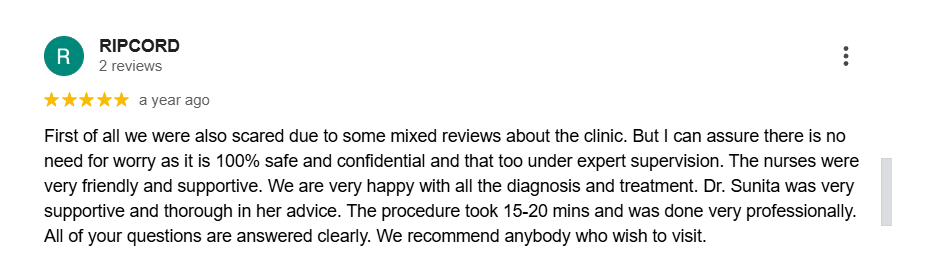
Abortion at American Hospital Bangalore Reviews:
A woman from a Gulf country — married, in her early thirties — discovered an unplanned pregnancy while her husband was working abroad. Safe abortion was not legally accessible for her in her circumstances at home. She reached out to American Hospital Bangalore by phone, arranged her visit under the cover of a 2-day trip, and completed the entire process within a single day. She was back home within 72 hours.
“I was terrified before I arrived,” she shared with the care team. “I left feeling like I had been treated like any other patient. Like what I was doing was completely normal. Because it is.”
Abortion patient review
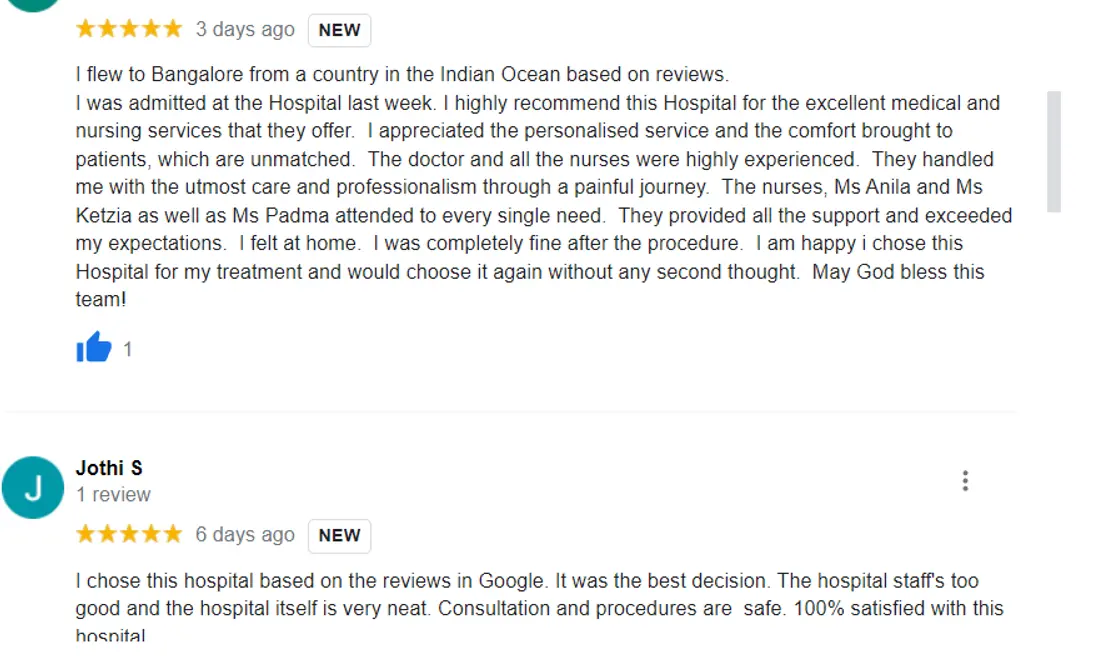
A woman from Mauritius had spent weeks trying to find a safe and trusted option locally. With none available, a friend who had previously travelled to Bangalore for care connected her with the hospital’s abortion helpline. She arrived alone, was accompanied throughout by nursing staff, completed the procedure the same day, and was on a return flight the following morning.
“I never once felt like I was doing something wrong,” she said quietly. “I felt cared for — properly cared for — for the first time since finding out.”
Abortion in India for overseas patients
These are not exceptional stories.
For the team at American Hospital Bangalore, they reflect the reality of what international reproductive healthcare access looks like on the ground — week after week, patient after patient, each one carrying the particular weight of a decision made in circumstances that offered very few safe choices.
India’s legal framework, its high standard of medical care, its internationally accessible cities, and the availability of single-appointment abortion services make it one of the most practical destinations in the world for women who need to travel for this care. From major Gulf cities, Bangalore is a two-to-three-hour flight. From Sri Lanka and the Maldives, it is closer still. The journey is short. The relief, patients consistently say, is profound.
American Hospital Bangalore: Where the World Comes for Safe, Legal, Confidential Abortion Care
For women travelling from across India and across the globe, American Hospital Bangalore (AHB) has established itself as a premier destination for abortion care — not by accident, but by focused design.
American Hospital Bangalore: Sole Abortion Service Provider
AHB is a boutique abortion hospital with a single clinical purpose: providing safe, legal, confidential, and completely non-judgmental reproductive healthcare to every patient who walks through its doors. Because abortion is the hospital’s sole area of service, the expertise of its team is in a category of its own. This is not a general hospital with an abortion department running alongside cardiology and orthopaedics or even other gynaecological concerns. This is a specialised institution where every gynaecologist, every nurse, and every team member is trained specifically in abortion care.
Abortion Care at Abortion Hospital India
The care journey begins at the very first contact. From the initial call or message through to the final recovery check, the AHB team manages the process end-to-end. International patients receive guidance on what to bring, what to expect, how to structure their travel, and how to communicate if anything needs attention after they return home.
Consultations are one-on-one with an experienced gynaecologist. Every patient is seen personally before any procedure is planned. Questions are answered fully. The clinical picture is understood completely. Nothing is rushed.
Nursing staff includes internationally trained professionals who understand the specific needs of patients arriving from abroad — including patients who may be travelling alone and need the kind of warm, steady presence that transforms a clinical environment into a genuinely supportive one.
Gentle Care Abortion in India
Every procedure follows a Gentle Care approach — techniques specifically designed to minimise pain, reduce invasiveness, and enable early recovery. Most patients leave the hospital the same day they arrive and return to normal activities within 24 to 48 hours. There is no prolonged discomfort. No drawn-out recovery. The approach is built around the patient’s return to her life, as quickly and comfortably as possible.
Privacy is absolute and legally protected. Under India’s MTP Amendment Act 2021, patient confidentiality is a statutory right. [10] AHB’s own protocols go further still: records are managed with complete discretion, and no aspect of a patient’s visit is accessible to anyone outside the care team. For international patients who carry particular privacy concerns, this protection is not an informal promise — it is law.
Complete Gentle Care procedures mean no repeat visits. The abortion is confirmed complete before any patient leaves the hospital. There is no uncertainty, no follow-up emergency, no risk of the incomplete outcomes that drive women back to a second procedure. For women who have travelled from another country to access this care, that certainty is not a luxury. It is a necessity.
No waiting. No judgment. And no explanation required. Adult women who make the journey to AHB arrive as patients exercising a legal right to healthcare. They are received, treated, and discharged with precisely the respect and professionalism that right deserves.
The Map Will Keep Changing. Women Deserve to Know Their Options Now.
Every country that expands abortion access changes the conversation for its neighbours. Every patient who receives safe care and tells even one other person about it chips away at the stigma that keeps others from seeking help. Furthermore, every piece of content that treats reproductive healthcare as normal, essential healthcare makes the next woman a little less afraid.
Progress is not linear. The United States reminded the world of that in 2022. But the overall arc — across six decades of data, across more than 60 countries — has been toward greater access, greater safety, and greater recognition that decisions about a woman’s body are hers to make.
There are still 24 countries with total bans. [12] There are still regions where a woman’s only safe option is to travel. There is still an enormous distance between where the world is and where it needs to be.
But the path is being walked. By lawmakers. By advocates. Importantly, by the educators who write about these issues without shame or euphemism. And by the medical professionals who choose to make compassionate, skilled abortion care their professional purpose.
At American Hospital Bangalore, we are proud to be part of that journey.
Wherever you are coming from — your health matters. Your safety matters. And you deserve care that says so clearly.
To enquire about abortion services at American Hospital Bangalore — including international patient support, appointment scheduling, and confidential consultations — contact the AHB care team. All enquiries are handled with complete privacy from the very first contact.
References
- Firstly, The Guardian / Multiple news outlets — UN Endorses Resolution Promoting Equal Earth Projection Over Mercator Map (2024).
- Then, World Health Organisation (WHO) — Global Abortion Incidence.
- Next, World Health Organisation (WHO); Guttmacher Institute — Unintended Pregnancy and Abortion Worldwide (2022).
- Next, WHO South-East Asia Regional Office — International Safe Abortion Day Address, Dr Catharina Boehme, September 2025.
- Also, World Metrics — Unsafe Abortion Statistics, verified May 2026.
- Council on Foreign Relations — Abortion Law: Global Comparisons, March 2024, citing WHO data.
- AS/COA (Americas Society / Council of the Americas) — Explainer: Abortion Rights in Latin America, updated 2023.
- Centre for Reproductive Rights — World’s Abortion Laws Map (2024); PBS NewsHour — How the U.S. Compares with the Rest of the World on Abortion Rights (2022).
- Malay Mail — Abortion Rights Worldwide: Expanding Access in Some Countries, Tightening Bans in Others, September 2024.
- WHO India — India’s Amended Law Makes Abortion Safer and More Accessible, April 2021; Live Law — MTP Amendment Act Comes Into Force, September 2021.
- Council on Foreign Relations — Abortion Law: Global Comparisons, March 2024.
- Global Citizen Solutions — The Abortion Laws: Which Countries Allow Abortion?, August 2025.
- Al Kabban & Associates; LYLaw — Analysis of Cabinet Resolution No. 44 of 2024, UAE Ministry of Health, effective June 21, 2024.
- World Metrics — Abortion Statistics 2026, verified 2026. Following the Dobbs v. Jackson Women’s Health Organisation ruling (2022), 14 U.S. states imposed near-total bans, cutting abortion access in those states by 59%.
- Centre for Reproductive Rights, as cited in Malay Mail, September 2024.
- Guttmacher Institute — Unintended Pregnancy and Abortion Worldwide (2022).
- Guttmacher Institute; World Metrics (2026). n are 3 times more likely to have an unsafe abortion; the global economic cost of unsafe abortion to health systems is estimated at $16 billion annually.
Related Posts:
- Flags Wave for National Freedom, Yet Women Wear a Mask of Silence
- Stuck in Abu Dhabi with an Unwanted Pregnancy: Your Quick Abortion Guide
- How Indonesia’s Dairy Industry Affects Women’s Healthcare and Abortion Access?
- Explore How MediSave Benefits Apply to Abortion In Singapore
- McDonald’s French Fries After an Abortion in Singapore: Safe or Risky?
Quick Links:
- Going Through Abortion Alone? Your Guide on How To Plan
- Dating Anxiety is Real. What If It Leads to Unplanned Pregnancy?
- Do You Know Your Gut and Your Period Talk to Each Other?
- PMOS Doesn’t Mean You Can’t Get Pregnant — And Here’s Why That Matters
- Finally, Missed Period in Your 40s, 50s? Is it Perimenopause or Pregnancy?


Leave a Comment