
Unwanted Kit Bleeding Time & Cytotec Bleeding Time FAQs
Contents of This Post:
- Are Unwanted Kit and Cytotec the same?
- When should you expect bleeding after taking the Unwanted Kit or Cytotec?
- What to do if there is no bleeding after taking Cytotec or Unwanted Kit?
- Safe Abortion Alternatives to Unwanted Kit or Cytotec
Using the Unwanted Kit or Cytotec tablets for a medical abortion can raise many questions, especially about bleeding. Bleeding is a normal part of the process. Still, it can vary from person to person, pregnancy to pregnancy depending on various factors. The factors can range from the medicine to its dosage or mode of administration to patient-specific personal factors.
Knowing what to expect can help you prepare you for what’s to come and reduce your anxiety. Also, it can help you distinguish what’s normal and when to seek immediate medical attention if something unexpected turns out.
Many people ask, “What’s the Unwanted Kit bleeding time?”, “How soon does the bleeding start?” and “For how long it shall continue?”. People often find confusion surrounding the bleeding pattern with abortion pills and what is considered normal. Others worry about heavy bleeding or what to do if it doesn’t stop. These are valid concerns, and this post is here to address them.
Bleeding after taking the Unwanted Kit usually means the process is working. However, it’s important to understand what’s normal and when to seek medical advice. Clear, accurate information can help you manage this experience safely and confidently. In this post, we’ll answer common questions about bleeding after using the Unwanted Kit. Whether you’re preparing for the process or already experiencing it, this guide will help you easily navigate it.
Are Unwanted Kit and Cytotec the same?
Let us first begin by clearing a common concern, that women especially those residing in places like Dubai, Abu Dhabi, Ajman, Sharjah, Doha, Muscat, Kuwait, Ras Al Khaimah, Fujairah, Umm Al Quwain often have regarding abortion pills. Most women in these places buy abortion pills from illegal suppliers risking their health and lives. Mostly, abortion laws in these countries are highly strict.
Such women often buy fake or expired pills or sometimes they may buy the right pills which may fail. Or they may buy only Cytotec which has a lesser efficiency. Let’s see the differences.
Unwanted Kit and Cytotec are both used for medical abortions, but they are not the same. Each has a different composition and works differently in the abortion process. Understanding their differences is essential to making an informed decision about their use.
What is an Unwanted Kit?
Unwanted Kit is a combination of two medications: mifepristone and misoprostol. It comes as a combipack marketed under the umbrella of Mankind Pharma, in India and overseas also.
Mifepristone tablet comes in the strength of 200mg as a single tablet in the pack. It blocks the hormone progesterone, also known as pregnancy hormone, which is essential for maintaining a pregnancy. Without progesterone, the fetus doesn’t get the essential nutrition for growth. Besides, the lining of the uterus breaks down, making it easier for the pregnancy tissue to detach.
Misoprostol comes as four tablets in the pack with each tablet of strength 200 mcg. It causes the uterus to contract, expelling the pregnancy tissue since it acts on the uterine muscles and brings their contraction.
This combination mimics a natural miscarriage and has a success rate of nearly 92% when used correctly. But here you need to know that without a prescription from an abortion doctor, one may not know the right dosage, or the best mode of administration for a particular woman. Additionally, one may not know whether the pregnancy that she wishes to terminate is even eligible for a medical abortion. There are other abortion methods, from which the doctor selects the best method and tailors it as per the patient’s requirements.
What is Cytotec?
Cytotec contains only misoprostol which is different from the composition of the Unwanted Kit. It causes uterine contractions to expel pregnancy tissue but does not block progesterone. The unwanted kit contains both the required medicines for the abortion, unlike Cytotec.
Misoprostol alone is less effective, with a success rate of around 75–85% only. It also requires higher doses, which may increase side effects like cramping and diarrhea.
Why Does Unwanted Kit Have a Higher Efficacy Rate?
The two-step process in Unwanted Kit makes the abortion more effective and complete. Mifepristone prepares the uterus by detaching the pregnancy tissue. Misoprostol then ensures the tissue is expelled.
Cytotec, with only misoprostol, relies solely on uterine contractions. This can leave some tissue behind, increasing the risk of incomplete abortion.

Incomplete abortion
When to expect bleeding after taking Unwanted Kit or Cytotec?
Whether you use Unwanted Kit or Cytotec, you will experience bleeding as your body expels the pregnancy tissue. However, the timing, amount, and duration of bleeding can vary. This is one of the biggest concerns, especially when someone is self-medicating.
When one visits the doctor for an abortion, one may receive guidance on what to expect from Unwanted Kit bleeding time. Besides, the patient also receives guidance on what abortion bleeding looks like, when it should start and how long should it last. Also, the doctor will guide you into what’s normal and when to reach out for help immediately.
The truth is different for each pregnancy since bleeding time may vary significantly. Some women may start to bleed a little only after taking Mifepristone while most women don’t until they take Misoprostol. Most women usually start to bleed within an hour after taking Misoprostol tablets. But some may not bleed until a couple of hours. On a usual scale, a woman should start bleeding within 6 hours post Misoprostol administration.
Here’s some information to help you understand your bleeding pattern better.
Bleeding After Taking Unwanted Kit:
If you use the Unwanted Kit, bleeding usually starts after you take the second pill, misoprostol. It can begin within 1–4 hours of taking the misoprostol.
The bleeding often starts light and becomes heavier, resembling a heavy period with clots. This is a sign that the abortion process has begin and the pregnancy tissue is being expelled. The heavy bleeding may last for a few hours and then gradually taper off. Light spotting or bleeding may continue for up to two weeks, but this is normal.
However, if the spotting or bleeding continues beyond days 7-10 after taking Misoprostol from the Unwanted kit, you need to make a follow-up appointment. You will need an ultrasound to ascertain the success of the abortion procedure you underwent with abortion pills. If there is any pregnancy tissue remaining in the womb resulting in cramps and bleeding, you may need a surgical procedure to complete the abortion.
Bleeding After Taking Cytotec:
With Cytotec (misoprostol alone), bleeding may take slightly longer to start, usually within 4–6 hours. The bleeding pattern is similar, starting light and then becoming heavier with clots and gradually going away over days or weeks.
However, because misoprostol is used alone, the process may be less predictable and require higher doses. Also, if it results in an incomplete abortion, you will need an additional procedure to complete the process.
Bleeding Patterns and Variability:
Heavy bleeding with clots is expected during the active phase of the abortion. This is normal as your body expels the pregnancy tissue. But very large clots may cause concern and if you continue to pass large-sized clots, you need to see the doctor immediately.
Cramps are common and often accompany the bleeding. Using pain relief medicines often available Over The Counter (OTC) may offer some help. A heating pad can help if the pain is moderate and bearable.
The amount of bleeding depends on factors like how far along you are and your body’s response to the medication. Bleeding is more when you are further in your pregnancy while it is less for early pregnancies, less than 6 weeks.
What Is Unexpected or Concerning?
- Excessive Bleeding: Soaking more than two large pads in an hour for two hours straight is not normal. Seek medical help immediately if this is what you are experiencing after taking either Cytotec or Unwanted Kit.
- Severe Pain: Moderate pain with abdominal cramps is a normal part of the process just like your period. But, intense pain unbearable, that doesn’t improve with medication or rest is a warning sign necessitating medical help.
- No Bleeding: If you don’t bleed within 24 hours of taking misoprostol, contact your healthcare provider. It may indicate the abortion was incomplete or unsuccessful. It can also be a case with an ectopic pregnancy. This can be a medical emergency and requires you to visit the doctor immediately. If you visit the doctor before taking pills, she will recommend you undergo an ultrasound since it can detect an ectopic pregnancy early. Early detection will also mean fewer complications with early medical treatment depending on the patient’s specific medical condition.
- Foul-Smelling Discharge or Fever: These symptoms could indicate an infection and require immediate attention. Do not underestimate an infection possibility after abortion. An untreated infection can result in sepsis which can be fatal and hence, seek attention if the fever doesn’t subside in 24 hours.
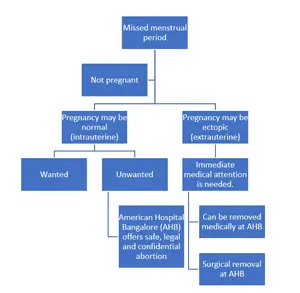
Ectopic Pregnancy
When to Contact a Doctor?
It’s important to stay alert for signs of complications after taking any kind of MTP kit. While most people experience normal bleeding patterns, unexpected symptoms need prompt medical care. Heavy bleeding or no bleeding at all after taking Unwanted Kit or Cytotec are unexpected. Also, bleeding or spotting after a week may need you to have a follow-up.
Then, intense pain, fever or the patient getting unconscious are the warning signs to get a check-up at the earliest. By understanding these patterns and knowing when to seek help, you can manage the process safely and with confidence. Besides, you can seek help in the hour of need.
It is also in your best interest to have someone close from your family or a friend or companion to stay by your side as you undergo an abortion. It can be both physical support to help you with the chores and also emotional support you may be needing this time. Also, in an event of unexpected outcome, one can drive you to the hospital immediately.
What to do if there is no bleeding after taking Cytotec or Unwanted Kit?
If you don’t experience bleeding after taking Cytotec or Unwanted Kit, it’s important to act quickly. Bleeding is a key sign that the abortion process has started and shall progress as a natural miscarriage. When it doesn’t happen, it could indicate an issue that needs medical attention.
What can be the probable reasons for no bleeding after taking the Unwanted Kit?
Incomplete or Failed Abortion
In some cases, the medications may not work as intended. This can happen if the pregnancy tissue isn’t fully expelled or if the medications don’t effectively terminate the pregnancy. If the abortion is incomplete or fails, you will need medical intervention, such as a suction or surgical abortion, to complete the process.
Ectopic Pregnancy
An ectopic pregnancy occurs when the embryo implants outside the uterus, often in a fallopian tube, but can be at other locations like the abdominal cavity, cervix lining, etc. Medical abortion pills like Cytotec or Unwanted Kit cannot expel an ectopic pregnancy since the pregnancy is not in the womb. Symptoms of an ectopic pregnancy include sharp abdominal pain, dizziness, and no bleeding after taking abortion pills.
What Should You Do?
Contact Your Doctor Immediately.
If there is no bleeding within 24–48 hours of taking misoprostol, reach out to your healthcare provider. They will likely recommend an ultrasound to determine if the abortion was incomplete or if there’s an ectopic pregnancy.
Follow-Up Treatment:
- For incomplete or failed abortion: The doctor may perform a suction or surgical abortion to remove the pregnancy tissue safely.
- For ectopic pregnancy: Early detection is crucial. The doctor may use medications like methotrexate to stop the ectopic pregnancy or, in severe cases, perform surgery to remove it.
Why Early Action Matters?
Delaying treatment for an incomplete abortion can lead to infection or heavy bleeding.
An untreated ectopic pregnancy is life-threatening and requires immediate care.
If you don’t experience bleeding, don’t wait. Seek medical help to ensure your safety and get the right treatment promptly.
Safe Abortion Alternatives to Unwanted Kit or Cytotec:
If you are considering alternatives to the Unwanted Kit or Cytotec, Gentle Care abortion procedures at American Hospital Bangalore (AHB) offer the best option. These procedures are safe, efficient, and designed for minimal discomfort. AHB specializes in providing compassionate, high-quality care for women seeking abortion in India.
Gentle Care Suction Abortion for Pregnancies Up to 12 Weeks:
Gentle Care suction abortion uses the vacuum aspiration method, which is highly effective. The procedure takes only a few minutes and is completed in a single appointment. It is an outpatient procedure, so you can return home the same day. The method ensures minimal discomfort and no pain, thanks to advanced techniques and care.

Gentle Care suction abortion vs Medical abortion
Recovery is quick, and no follow-up appointments are usually necessary. Unlike medical abortion, there is no need to wait for bleeding to confirm the abortion is complete. You can leave the hospital knowing the process was successful.
Patients from countries like the UAE, Maldives, Mauritius, Singapore, Philippines, Kuwait, Oman, Qatar, Indonesia, Sri Lanka, and Bhutan often travel to Bangalore, India for Gentle Care abortion procedures. They easily obtain a single-day abortion in India since abortion in their respective countries is highly restricted and often a criminal act.
But, Indian abortion law permits safe abortion access to all women, regardless of their nationality or marital status up to 20 weeks with their consent only.
Gentle Care Induced Abortion for 12–20 Weeks:
For pregnancies between 12–20 weeks, AHB offers Gentle Care induced abortion. This method combines medicine-induced labor with a Dilation and Evacuation (D&E) procedure. The process is performed under mild sedation to ensure comfort and safety. It is nearly 100% efficient and managed by skilled professionals.
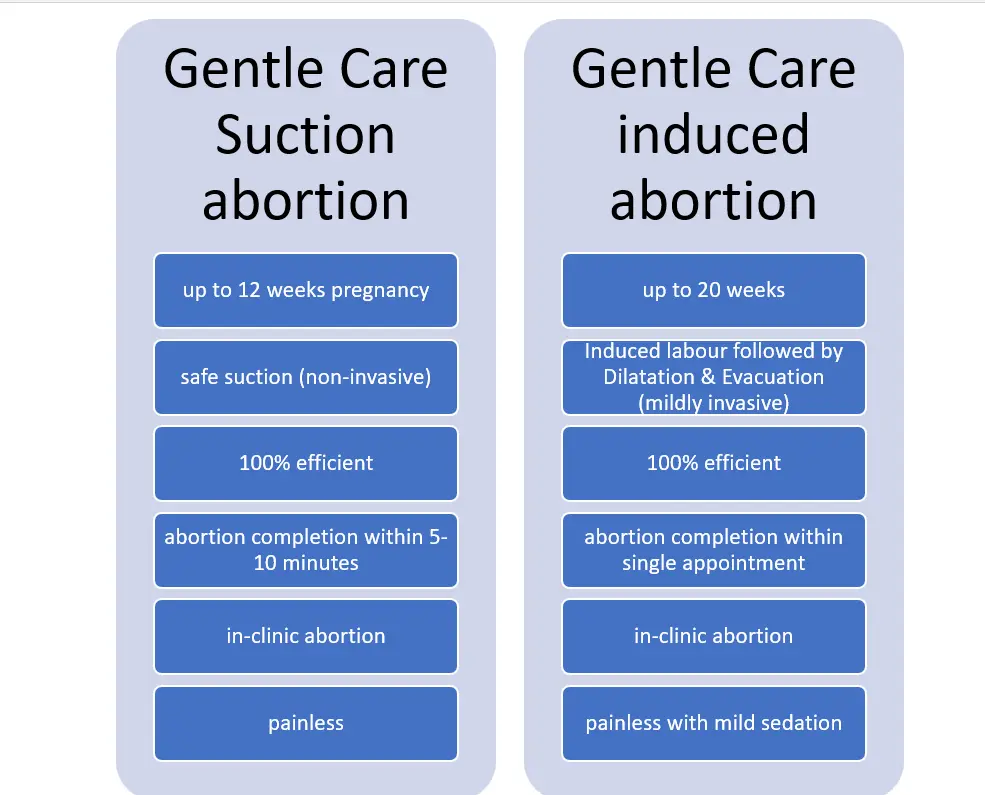
Gentle Care abortion in India
Why Choose Gentle Care Abortion at AHB?
Abortion in India is legal for up to 20 weeks in most cases, even for a trivial matter such as an unplanned pregnancy resulting from contraceptive failure.
Women, whether married or unmarried, Indian citizens, foreign nationals, or expats, can legally and confidentially access abortion services at AHB.
The process requires only your consent—no additional approvals are necessary.
AHB prioritizes your privacy and ensures a safe, supportive environment.
Gentle Care abortion procedures at AHB are designed for women seeking a stress-free, efficient, and safe abortion experience. Whether your pregnancy is early or advanced, you can rely on their expert care to meet your needs confidently.
Schedule a safe, legal, confidential, painless, quick abortion appointment.
Related Posts:
- Clearblue Pregnancy Test Results: Is the Positive Bothering You?
- Spontaneous Abortion: What, When & How Guide for UAE Women
- Women’s Abortion Clinics for Unwanted Pregnancies in UAE
- What happens if you get an abortion in Dubai illegally?
- Can abortion cause infertility? Doctor Speaks Up


Thank you for so much information. I’ve been curious about the Unwanted Kit, particularly regarding its components and how it compares to other options like Cytotec.
You are always welcome. Thank you for writing us.