
Is abortion in Dubai legal for foreigners? UAE abortion laws
Contents of This Post:
- Abortion in Dubai, UAE: Laws, Policies & Punishment
- What the UAE’s Abortion Laws Lack to Be Fully Women-Friendly?
- What’s the difference between the abortion UAE laws for natives and foreigners?
- Where can foreigners or expats in Dubai obtain a safe and legal abortion?
“No”. The abortion in UAE law says no legal abortion even for foreigners in casual cases. However, one can obtain it under restrictions only in permissible circumstances. But there is more to know about the law and the solution you require in the current situation.
Navigating an unplanned pregnancy in the UAE can be a daunting task, especially for foreigners. Besides, the country’s strict abortion laws can limit access to safe and legal procedures. Many women in this situation find themselves seeking alternative options, some of which are unsafe. However, safe, legal and confidential abortion options also exist for foreigners or expats in Dubai.
This post will help you learn about your abortion in UAE rights as a foreigner. Besides, it shall also guide you regarding your safe abortion choices at a safe abortion women’s clinic. Let’s explore!
Abortion in Dubai UAE: Laws, Policies & Punishment
The United Arab Emirates (UAE) has undergone significant legal transformations concerning abortion over the years. Although abortion UAE rules remain stringent restricting legal abortions on ethical and religious grounds, the changes also reflect a gradual shift toward a more nuanced approach. With the introduction of Cabinet Resolution No. 44 of 2024, the legal framework now addresses a wider range of permissible cases while ensuring strict regulatory oversight. This article delves into the evolving abortion in UAE laws, penalties, and their implications.
Historical Context: Previous Restrictions
Before the introduction of the new resolution, abortion laws in the UAE were highly restrictive. Governed by Federal Decree-Law No. 4/2016 on Medical Liability, abortions were permitted under two conditions:
- Threat to the Mother’s Life: If the pregnancy endangered the mother’s life, abortion could be considered.
- Fetal Abnormalities: Severe fetal malformation, proven by a medical committee, allowed abortion, provided it was performed within the first 120 days of pregnancy. Additionally, the malformation for which abortion in Dubai, UAE is permissible has to be serious. Not all anomalies fall into the category.
These restrictions emphasized the sanctity of life while leaving little room for other exceptional cases.
Cabinet Resolution No. 44 of 2024: A Major Shift Yet Insignificant for Most Women
The introduction of Cabinet Resolution No. 44 of 2024 on June 21, 2024, marked a liberalization of the UAE’s abortion laws. The resolution expands the circumstances under which abortion is permissible, adding three new scenarios:
- Non-Consensual Pregnancy: Abortion is permitted if the pregnancy results from an act committed against the woman’s will, such as rape or forced consent.
- Incestuous Pregnancy: If the pregnancy involves a family member or a close relative (muhram), abortion may be allowed.
- Spousal Request: Both spouses can jointly request an abortion, subject to approval by a specialized medical committee. However, the reason needs to be as serious as a threat to the woman’s life with evidence and approved by a medical committee.
Detailed Conditions for Permissible Abortions
The new resolution outlines stringent conditions for carrying out abortions. These include:
- The abortion is legally permissible to be conducted only within 120 days of pregnancy.
- It must be conducted by a licensed obstetrician-gynecologist in an approved medical facility.
- Written consent from the pregnant woman is mandatory unless an emergency arises. If consent cannot be obtained, it can be provided by the husband or guardian.
- A specialized medical committee must review and approve the abortion request.
- Pre- and post-abortion medical and social consultations are mandatory to support the woman’s well-being.
These provisions aim to ensure the procedure is ethical, safe, and in compliance with medical standards.
Oversight by Medical Committees:
The resolution mandates the formation of medical committees under every health authority. Each committee comprises three doctors, including an obstetrician-gynecologist. Their role is to evaluate abortion requests, ensuring they meet the outlined conditions. This system enhances transparency and accountability in abortion decisions.

Abortion in Dubai
Penalties for Unlawful Abortions in Dubai, UAE:
The UAE imposes strict penalties for unauthorized abortions under Article 391 of the UAE Penal Code and Article 33 of the Medical Liability Law:
- For Pregnant Women: Women who self-abort or willfully consent to an abortion in Dubai face imprisonment of up to one year or fines of AED 10,000.
- For Facilitators: Anyone causing an abortion with the woman’s consent can face imprisonment of at least two years or a fine of AED 10,000.
- Penalties For Medical Professionals: Doctors, pharmacists, or technicians involved in unauthorized abortions face imprisonment of up to five years. With an unsafe abortion in UAE resulting in the death of the patient, the penalty increases to 5–10 years.
- For Non-Consensual Abortions: Causing an abortion without the woman’s consent attracts harsher penalties, with imprisonment of up to seven years.
Ethical and Legal Safeguards
The UAE’s abortion laws emphasize informed consent and ethical medical practices. Article 15 of the Medical Liability Law mandates the explicit consent of both spouses for reproductive interventions. This provision protects individual autonomy and ensures shared decision-making in sensitive situations.
Objectives of the Revised Framework
The reformed abortion laws aim to:
- Protect Women’s Health and Safety: By expanding permissible cases and defining strict conditions, the law seeks to safeguard women’s physical and mental well-being.
- Curb Illegal Abortions: The comprehensive legal framework reduces the prevalence of dangerous, unregulated abortion practices.
What the UAE’s Abortion Laws Lack to Be Fully Women-Friendly?
While the UAE’s recent reforms to abortion laws mark significant progress, the framework still falls short of being entirely inclusive or supportive of women’s reproductive rights. Many critical scenarios remain unaddressed, leaving gaps that impact the autonomy and well-being of women. Here’s a closer look at the areas where these laws could improve to truly align with a women-centered approach.
1. Lack of Provisions for Contraceptive Failure
Contraceptive failure is a common issue that can lead to unintended pregnancies. The current laws do not consider this scenario as a valid reason for abortion. For many women, an unintended pregnancy due to contraceptive failure can pose severe emotional, financial, and physical challenges.
Allowing abortions in such cases would empower women to make decisions best suited to their circumstances and life goals. Without this option, women may feel forced into unwanted pregnancies, leading to long-term consequences for their mental and physical health.
Or they can travel to Bangalore, India because abortion in India is legal in cases of contraceptive failure. Indian MTP law allows abortion to foreigners just like Indian citizens for up to 20 weeks in general cases by choice.
2. Restrictive Time Limit of 120 Days
The current legislation permits abortion only up to 120 days of pregnancy, primarily for cases involving threats to the mother’s life or severe fetal anomalies. However, many fetal abnormalities are not detectable until after the 120-day mark. Late-term scans often reveal conditions that significantly affect the fetus’s viability or quality of life. But under the current law, women must carry such pregnancies to term.
This rigid timeline disregards the medical complexities and emotional strain associated with such situations, leaving families to face prolonged suffering.
On the other hand, abortion in India laws are more compassionate and pragmatic in such events. Advanced medical technology now allows for accurate diagnoses later in pregnancy, and the legal framework reflects this reality. Indian laws not only allow abortions in such cases up to 24 weeks but one can also seek legal aid beyond this period and get the best possible help.
3. No Provisions for Abortion by Choice
A critical omission in the UAE’s abortion laws is the lack of provision for abortions by choice. Women seeking to terminate pregnancies due to personal, social, or economic reasons are not accommodated. This limitation undermines a woman’s right to make decisions about her own body and life.
In many progressive countries, abortion by choice during the early stages of pregnancy is a standard provision, emphasizing a woman’s autonomy. Therefore, countries like India have seen a reduction in the stigma surrounding abortion.
Abortion in India laws for Dubai women encourages women to seek safe and regulated medical care rather than attempting unsafe abortion practices. By doing so, the law not only prevents unsafe practices but also safeguards the health and life of many women who can suffer at the hands of unsafe abortion complications.
4. Exclusion of Unmarried Women
The current framework of abortion in Dubai laws does not account for pregnancies among unmarried women, effectively criminalizing their reproductive choices. This exclusion not only ostracizes unmarried women but also forces them to seek unsafe or illegal abortions. The lack of legal avenues for unmarried women reflects a discriminatory approach, failing to recognize their right to healthcare and autonomy.
Again, India is a choice for Dubai women seeking abortion as unmarried because abortion in India is legal regardless of marital status. This too has seen a decline in the stigma attached to abortion and even premarital sexual intimacy. This reflects the Indian abortion laws’ inclusive approach ensuring no woman is left without access to safe and legal abortion services.
If you are unmarried and seeking an abortion for any reason, you can opt to obtain it at the best abortion hospital in India, American Hospital Bangalore (AHB), especially catering to international patients in such dwindled situations like yourself.
5. Neglect of Mental Health Considerations
The existing UAE abortion policies focus on physical health risks to the mother. But they ignore the psychological toll that unwanted pregnancies can have. Mental health is a critical component of overall well-being. So, pregnancies that cause severe emotional distress should be considered for termination. For example, women facing abusive relationships, financial instability, or a lack of support systems may experience significant mental health challenges that justify the need for abortion.
India again leaves behind UAE laws by acknowledging the complex realities many women face. Their approach aligns with modern medical understanding, which treats mental health with the same importance as physical health. So, abortion in India is legal even under circumstances where the woman’s mental health is at risk due to an unwanted or unplanned pregnancy.
6. Inadequate Consideration of Ongoing Physical Health Risks
The policies on abortion in Dubai fail to address situations where the pregnancy poses ongoing physical health risks that fall short of being life-threatening. Chronic conditions such as severe gestational diabetes, high blood pressure, or autoimmune disorders can worsen during pregnancy, jeopardizing the woman’s long-term health. The absence of provisions for such scenarios places women in difficult and potentially dangerous situations.
Indian law acknowledges these conditions as well and allows for pregnancy termination for any woman seeking it.
7. Stigma and Lack of Awareness
The restrictive nature of the UAE abortion laws perpetuates the stigma around abortion. Many women may not be aware of their legal rights. Also, healthcare providers might hesitate to provide services due to fear of legal repercussions. A more liberalized and communicated legal framework could help reduce this stigma and encourage women to seek proper medical care.
Abortion in India on the other hand has very clear rules for legal, safe and confidential abortion care to all women. The laws in India undergo regular revisions to protect women’s health and autonomy.
8. Barriers to Access for Vulnerable Populations
The requirement for residency and consent from a husband or guardian poses significant barriers for vulnerable groups. Such vulnerable groups often include migrant workers, victims of abuse, or women in controlling relationships. These women may lack the necessary documentation or support to navigate the legal and medical systems. This leaves them without viable options for safe abortion.
Here too, Indian abortion law requires only the consent of the woman seeking abortion. Any woman, married or unmarried can get a legal abortion in India with her consent only. No spousal consent and no parental consent are essential.
Therefore, while the UAE’s reforms to abortion laws are a step forward, the framework still lacks critical provisions to be fully women-friendly.
What’s the difference between the abortion UAE laws for natives and foreigners?
The UAE’s abortion laws are complex and often subject to interpretation. While the legal provisions remain the same, how the law implies, the consequences of unsafe practices and social implications differ based on citizenship status. Here are the key differences:
Legal Framework and Access to Abortion:
Most importantly, non-Emirati women seeking an abortion in Dubai, UAE must have valid residency for at least one year.
The UAE permits abortion only under specific circumstances and within strict limits. Both Emirati and foreign women must follow the same legal procedures, including obtaining approval from a medical committee. However, foreigners often face additional barriers, such as language differences and unfamiliarity with the system.
Social and Legal Penalties for Foreigners:
Foreigners are at higher risk of severe consequences if they violate abortion laws. While Emirati women may face legal action for illegal abortions, the repercussions often stop at fines, imprisonment, or family intervention. For foreigners, penalties can extend to deportation. Authorities may revoke residency permits, forcing women to leave the country permanently.
Foreign women without legal residency may find it harder to access authorized medical care. If they attempt illegal abortions, they face not only imprisonment but also permanent removal from the UAE. This punishment underscores the harsh impact of breaking these laws for expatriates.
Professional Blacklisting and Job Loss:
Many foreign women in the UAE work under employer-sponsored visas. A criminal record related to abortion can lead to job termination. Some companies blacklist individuals involved in legal or social controversies, preventing them from being rehired in similar roles. Emirati women rarely face such employment-related consequences due to familial or societal protections.
Blacklisted women might also struggle to find opportunities in other Gulf Cooperation Council (GCC) countries. Regional databases often share records of criminal offences, including illegal abortions, limiting employment prospects.
Health and Travel Consequences of Unsafe Abortions
Foreign women who cannot access legal abortions might resort to unsafe procedures such as buying abortion pills online or through illegal resources. These procedures carry severe health risks, such as incomplete abortion, infections, heavy bleeding or long-term reproductive damage. Some complications like internal injury, heavy blood loss, and ectopic pregnancy rupture can even be life-threatening.
If complications arise, these women might avoid seeking medical help due to fear of deportation or legal action. Obtaining an unsafe abortion can also affect future travel. Countries with strict visa regulations may deny entry to individuals with a criminal history. This restriction impacts foreigners more significantly, as travel often plays a critical role in their work and personal lives.
Greater Vulnerability to Stigma
Foreign women often face harsher judgment in the UAE’s conservative society. While Emirati women may receive community support despite legal issues, foreigners rarely benefit from such understanding. Moreover, this stigma can isolate them further, limiting their ability to seek help.
Although the UAE’s abortion laws are the same for all women, they may disproportionately affect foreigners. Deportation, professional blacklisting, and restricted travel are unique challenges they face in addition to legal penalties.
Where can foreigners or expats in Dubai obtain a safe and legal abortion?
Have you noticed the changes in the laws regarding abortion in the UAE and India? You may now know that India offers equitable and compassionate solutions for all women, regardless of nationality. Foreigners, Indian expats, Russian expats, German expats, Malayali women and even Emirati women can safely, legally and confidentially obtain an abortion in India for up to 20 weeks.
Another advantage is the abortion is legally available equally to all women regardless of their marital status. Furthermore, any woman can obtain it with her sole consent and does not need to enter into any other form of trouble for gaining a partner’s consent or consent from guardians.
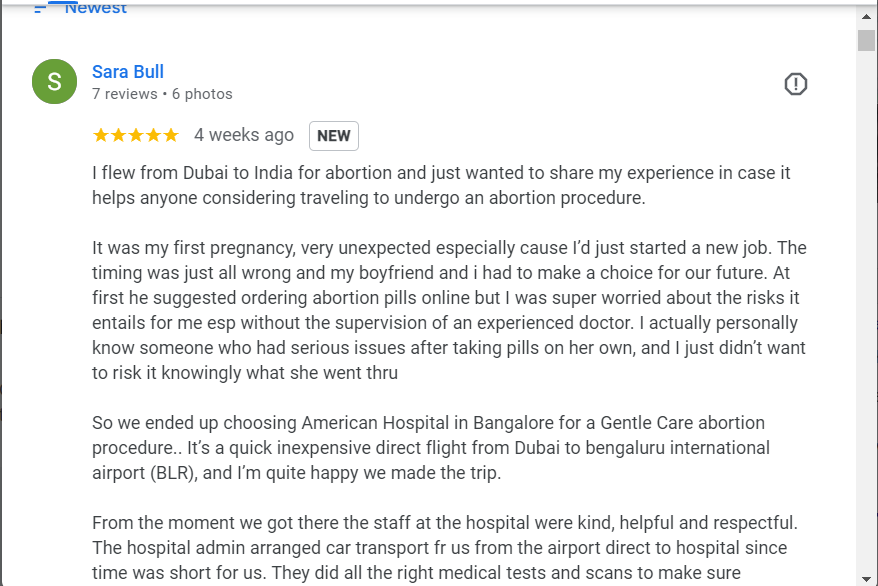
American Hospital Bangalore (AHB), in Bengaluru, India is just a short flight away. AHB is a unique facility that offers abortion care to any woman seeking it with a personalized approach with only a single patient being attended to at a time.
AHB has pioneered Gentle Care abortion services for women like yourself who can get a quick single appointment and same-day abortion. With a success rate of nearly 100%, you can return to Dubai after abortion with the earliest flight available. Gentle Care abortions not only provide a comfortable and painless experience but also offer unparalleled care in a compassionate, friendly, caring and non-judgmental atmosphere.
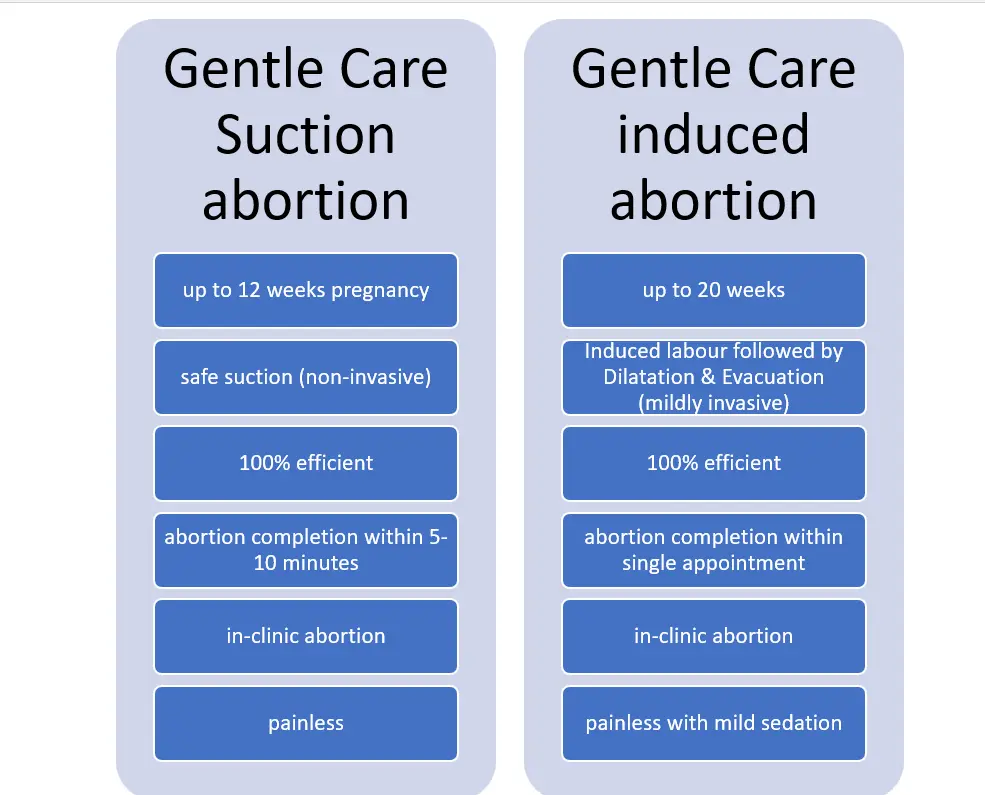
Come and experience the difference. Schedule an early appointment. Our coordinator can help you with assistance in travel and accommodation reservations. Additionally, stay in touch as we can arrange for your pick-up directly from the Bengaluru airport. If you want a guide for what to do next after arriving in India for an abortion, you can get the information you want at: What to do Next Once you Arrive at the Airport for Abortion in India?
We are looking forward to helping you with our quick, comfortable, safe, legal, painless and confidential abortion at our esteemed abortion centre in India for foreigners.
Schedule an abortion appointment.
Related Posts:
- Abortion Pills Dubai: Mifepristone or Misoprostol or Both?
- Abortion Pills Dubai: 3 Things You May Not Know!
- Are abortion illegal in Dubai: What you should know?
- Are abortion pills in Dubai safe to buy and use?
- What is the Cost of Abortion Pills in Dubai?


Leave a Comment