
Managing Self-Induced Abortion at Home: Dos and Don’ts
Contents of This Post:
- Why Self-Induced Abortion Without Medical Supervision Is Risky?
- Steps to Take Before Using Abortion Pills
- How to Manage a Medical Abortion at Home Safely
- Why Some Women Prefer Gentle Care Suction Abortion Over Pills
- Gentle Care Abortion at American Hospital Bangalore: A Safer Choice for Indian and Foreign Patients
Abortion is a deeply personal decision, and for those considering a medical abortion, safety should always come first. While abortion pills are a common option for early pregnancy termination, taking them without medical supervision can lead to serious health risks. The risks include incomplete abortion, excessive bleeding, or undiagnosed complications like ectopic pregnancy.
The safest approach is to consult a qualified doctor who can assess your eligibility for the abortion pill method through proper diagnostic tests. Once confirmed, managing the abortion correctly at home is crucial for a smooth recovery. This post will guide you through the essential dos and don’ts of handling a medical abortion after receiving the necessary medical approval.
For women who prefer a more reliable, quick, and painless abortion method, we will also introduce Gentle Care suction abortion—a safe, in-clinic procedure available at American Hospital Bangalore (AHB). With India’s legal framework allowing abortions for up to 20 weeks under various circumstances, both Indian and foreign patients can access high-quality abortion care in a safe and supportive environment.
Why Self-Induced Abortion Without Medical Supervision Is Risky
Many women consider self-induced abortion due to privacy concerns, fear of judgment, or limited access to safe abortion services. However, attempting to terminate a pregnancy without medical supervision can be dangerous and, in some cases, life-threatening.
The biggest risk is incomplete abortion, where pregnancy tissues remain in the uterus, leading to severe complications such as prolonged bleeding, infection, and even infertility if left untreated.
Without proper medical evaluation, there is also a possibility of ectopic pregnancy—a condition where the embryo implants outside the uterus, usually in the fallopian tube. Abortion pills do not work for ectopic pregnancies, and delaying treatment can cause internal bleeding as a result of ruptured pregnancy tissue, requiring emergency surgery.
Another major concern is incorrect dosage and administration. Abortion pills must be taken in the right sequence, through the right mode and at the right time for a successful outcome. Misuse or miscalculation can lead to failure, requiring additional medical intervention. Moreover, some women may have underlying health conditions or allergies that make abortion pills unsafe for them, which only a doctor can assess through proper medical tests.
To ensure safety, it is always best to consult a qualified abortion provider who can confirm the pregnancy stage, rule out risks, and guide you through a medically supervised abortion process. This significantly reduces complications and ensures a safer, stress-free experience.
Steps to Take Before Using Abortion Pills:
Before taking abortion pills, it is essential to follow a structured medical process to ensure safety and effectiveness. Self-medicating without proper evaluation can lead to complications, making it crucial to take the following steps under the guidance of a qualified doctor.
1. Confirm the Pregnancy, Its Duration & Location:
The first step is to confirm the pregnancy and determine its exact gestational age. This is done through:
- Urine pregnancy test: A quick way to detect pregnancy but not enough to determine how far along it is or if it’s intrauterine. You can buy any test kit like Preganews or Clearblue.
- Ultrasound scan: This is the most reliable method to confirm pregnancy, check its location (inside the uterus or ectopic), and determine its exact weeks of gestation. The abortion pill method is only effective for pregnancies up to 6 weeks (42 days) in most cases.
Ectopic pregnancy is a dangerous situation because abortion pills do not work for ectopic pregnancies. Instead, the condition requires immediate medical treatment to prevent life-threatening complications like internal bleeding and death.
Only an ultrasound scan can confirm whether the pregnancy is in the uterus. If an ectopic pregnancy is detected, the doctor will recommend appropriate treatment options.
2. Undergo Necessary Medical Tests:
Before prescribing abortion pills, a doctor may conduct the following tests:
- Blood tests to check haemoglobin levels (to assess the risk of excessive bleeding) and blood type (in case Rh-negative treatment is required).
- Hormonal tests to evaluate pregnancy progression.
- Overall health assessment to rule out conditions like severe anaemia, clotting disorders, or allergies that could complicate the abortion process.
- Liver Function and Renal Function tests to check if any dose adjustment is essential.
- Blood sugar levels for diabetic patients as high blood sugar levels can delay the healing.
These tests help determine whether the patient is an eligible candidate for a medical abortion or if another method, such as Gentle Care suction abortion, would be a safer option.
3. Receive Detailed Instructions on Abortion Pill Use
Once the doctor confirms eligibility, they will provide a proper dosage schedule and explain how to take the abortion pills correctly. The two-pill regimen as in Unwanted Kit consists of the following:
- Mifepristone: This pill blocks progesterone, the hormone commonly known as pregnancy hormone, which is needed to sustain pregnancy. It is usually taken first, under medical guidance.
- Misoprostol: Taken 24-48 hours later, this pill causes uterine contractions to expel the pregnancy tissue. The doctor will specify whether to take it orally (under the tongue) or vaginally, based on individual circumstances.
One of the commonly self-medicated pills for abortion in UAE and many other countries with strict abortion rules is Cytotec available through illegal means. It only contains Misoprostol and hence may not give the desired results.
Following the correct dosage and sequence is crucial for the abortion to be successful.
The combination of Mifepristone with Misoprostol has much higher efficacy than Cytotec alone. But both these medicines even when used together do not reach the efficacy equivalent of suction abortion making suction abortion a more reliable option for a successful procedure.
4. Understand What to Expect and When to Seek Help
A doctor will also explain:
- The expected symptoms, including cramping, bleeding pattern, how abortion bleeding looks like and passing of pregnancy tissue.
- Warning signs that indicate complications, such as excessive bleeding (soaking more than two pads per hour for more than two consecutive hours), unbearable pain, fever, or foul-smelling discharge, may indicate infection. Besides, the doctor will also tell you what to do immediately when you experience any of these.
-

Abortion Bleeding: What to Expect?
When to schedule a follow-up to confirm the abortion’s success through an ultrasound or blood test.

Why do These Steps Matter?
Skipping any of these steps increases the risk of incomplete or failed abortion, excessive bleeding, ectopic pregnancy rupture or severe complications. A well-planned medical abortion under a doctor’s guidance ensures safety, effectiveness, and peace of mind.
For those who want a more reliable and quicker alternative, Gentle Care suction abortion provides a safe, painless, and highly effective option, eliminating the uncertainties associated with abortion pills. We will discuss this in more detail later in the post.
How to Manage a Medical Abortion at Home Safely?
Once a doctor has prescribed abortion pills after confirming eligibility, managing the abortion process at home correctly is crucial for safety and effectiveness. While medical abortion is a non-surgical method, it is not a simple over-the-counter solution. It involves significant physical and emotional changes that require proper care, monitoring, and knowledge of when to seek medical attention.
Below is a step-by-step guide on how to safely manage a medical abortion at home after receiving approval from a qualified doctor.
1. Choose a Comfortable and Private Setting:
A medical abortion can take several hours, sometimes up to a couple of days, depending on how the patient responds to the pills. The process can cause heavy bleeding, intense cramps, nausea, and fatigue. To ensure safety and comfort:
Stay in a private and calm environment where you can rest without interruptions. It can be your home, rented apartment, homestay, hotel or even a hospital (if available) where you can feel comfortable and have easy access to all that you may need.
Sometimes, women may prefer homestays if they want a confidential abortion and do not want even the family to know about the same. This is particularly advantageous in cases of abortion for unmarried where women may not want their family to learn about the pregnancy or abortion.
Such couples can better opt for Gentle Care suction abortion which can help them opt out of unwanted pregnancy without getting into the trouble of booking a hotel or homestay for a longer stay with a medical abortion.
2. Keep a trusted person nearby in case you need assistance.
You can have your loved one, your family member or a friend to help you during this time and be by your side as you undergo physical pain.
Your companion can support you not just emotionally but also help you manage pain and give you all you may need for feeling comfortable and loved. The small gestures of support like getting you a heating pad, reheating it to relieve cramping pain, brewing up a good beverage, cooking a healthy meal or just giving you a calming massage can make the abortion experience not only bearable but also comfortable.
Avoid driving, strenuous activities, or handling important tasks during the process. Your partner can help you with these activities, for a few days until you feel comfortable resuming your routine.
Many women prefer starting the abortion on a weekend or a day off to allow time for rest and recovery. This prevents taking off from work, especially for professional women with important commitments to fulfil.
But remember, not all hospitals take in appointments for weekends. So, please inquire before visiting the abortion clinic and better schedule an appointment. Luckily, American Hospital Bangalore (AHB), providing abortion in India services takes in patients on weekends also, but with prior appointment to maintain complete privacy and confidentiality of the patient.
You can get a slot by inquiring on the abortion helpdesk today.
3. Take the Pills Exactly as Directed by Your Doctor:
Mifepristone (the first pill) is usually taken under medical supervision at the clinic or as per the doctor’s instructions. Most women do not feel immediate effects after taking this pill, though some may experience mild cramps or spotting. You can easily go home after taking this medicine at the hospital or can also bring it to take at home.
Misoprostol is taken 24 to 48 hours later, as instructed by the doctor since the time gap can vary for different pregnancies. The doctor can evaluate the patient-specific factors to guide the best gap to keep between taking the two medicines and also how to take them.
How to take it?
- Sublingual (under the tongue): The pills dissolve in the mouth within 30 minutes. Avoid swallowing them immediately. Most Misoprostol pills are sublingual. While some variants for oral administration with water are also available.
- Vaginal (inserted into the vagina): Some doctors recommend this method for better absorption and fewer side effects like nausea. Besides, the effectiveness of the abortion method may also improve with this mode of administration.
The doctor will provide clear guidance on the best method based on individual needs. Never alter the dosage or timing on your own.
4. Expect and Manage the Symptoms:
After taking Misoprostol, the body will begin the abortion process and start expelling the conception products. Here’s what to expect:
Bleeding:
Bleeding usually starts within 30 minutes to a few hours after taking the second pill but may take longer for some women. And there may also be instances of no bleeding after taking abortion pills. This can indicate a failed or incomplete abortion necessitating another medical intervention, usually surgical to remove the pregnancy or else it can start rotting in the womb causing infection.
It can be heavier than a period, with clots and tissue being expelled. This is normal and indicates that the abortion is progressing. Bleeding gradually reduces over the next few days to weeks but may continue lightly for up to two weeks.
Cramping and Pain:
Intense cramps are common as the uterus contracts to expel the pregnancy tissue. The pain is usually strongest in the first 6–8 hours after taking Misoprostol and gradually decreases. Use doctor-prescribed pain relievers only. Avoid aspirin as it may increase bleeding or any other over-the-counter analgesics until your abortion doctor approves of them.
Applying a heating pad or taking a warm bath can also help relieve cramps.
Other Common Symptoms:
- Nausea, vomiting, diarrhea: These may occur due to the effects of Misoprostol. Stay hydrated and rest to let these effects pass away.
- Mild fever and chills: Temporary chills are common, but a persistent fever over 100.4°F (38°C) could indicate an infection and require medical attention.
5. Monitor for Warning Signs
While medical abortion is generally safe when supervised by a doctor, certain symptoms indicate a possible complication. Seek immediate medical attention if you experience any of the following:
Excessive Bleeding
- Soaking more than two extra large (XL) pads per hour for two to three consecutive hours.
- Large blood clots (bigger than a tennis ball or lemon) for several hours.
Severe Pain
- If the cramps are intense and pain is unbearable even after taking pain relievers.
- Pain that persists intensely for more than 24 hours without improvement. But you should not wait for so long if you are in intense pain. Pain should gradually improve after fetal expulsion in 2-3 hours.
Fever or Infection Signs
- Fever above 100.4°F (38°C) that lasts more than 24 hours.
- Foul-smelling vaginal discharge, severe weakness, or dizziness.
Signs of Incomplete Abortion
- If the bleeding suddenly stops too soon and you still feel pregnancy symptoms after several days.
- Or if the bleeding continues even after a week. You cannot ignore even spotting after a week of taking abortion pills.
- If you continue to feel nauseous, bloated, or experience breast tenderness a week after taking the pills, it may indicate that the abortion was incomplete. A follow-up visit is crucial to confirm completion.
Ignoring these symptoms can lead to serious complications, including infection, excessive blood loss, or the need for surgical intervention.
6. Take Care of Yourself After the Abortion
Recovery after a medical abortion varies from woman to woman. Some feel physically fine within a day or two, while others may take longer. Here’s how to ensure a smooth recovery:
- Rest as much as possible for the first couple of days. Avoid heavy lifting, excessive exercise, or any strenuous activities.
- Stay hydrated and eat nutritious foods to help the body recover.
- Avoid inserting anything into the vagina (no tampons, menstrual cups, or sexual intercourse) for at least two weeks to prevent infections.
- Follow up with your doctor within 7–14 days to confirm the abortion was successful through an ultrasound or blood test. This step is essential, even if you feel fine.
- Be Prepared for Emotional Changes. Hormonal changes after abortion can cause mood swings, sadness, anxiety or emotional sensitivity. While many women feel relief, some may also experience mixed emotions. This is normal. Seek support if needed from anyone you confide in. If you experience prolonged sadness, anxiety, or emotional distress, consider reaching out to a professional for emotional support.
Why does Medical Supervision matter?
Managing a medical abortion at home only after proper medical evaluation significantly reduces risks and ensures safety. Self-medicating without professional guidance can lead to incomplete abortion, severe bleeding, or life-threatening complications.
For women who want a more predictable, quicker, and safer alternative, Gentle Care suction abortion is an option worth considering. Unlike medical abortion, it provides instant confirmation of a successful procedure without the uncertainty of whether the abortion was complete.
Why do Some Women Prefer Gentle Care Suction Abortion Over Pills?
While medical abortion with pills is a common method for early pregnancy termination, many women prefer a more reliable, quick, and painless alternative. Gentle Care suction abortion offers several advantages over abortion pills, making it a preferred choice for those seeking a hassle-free experience with minimal discomfort and maximum efficiency.
Here’s what goes into making this choice:
1. 100% Effectiveness in a Single Procedure
Medical abortion has a failure rate of 5-7%, meaning some women may experience an incomplete abortion and require additional medical intervention.
On the other hand, Gentle Care suction abortion is nearly 100% effective in a single procedure. There is no uncertainty about whether the abortion is complete. Plus, you get this confidence even before you leave the hospital premises.
With suction abortion, there is no need for a follow-up ultrasound to check if the abortion was successful in most cases, unlike medical abortion, which may require additional appointments and procedures if complications arise.
2. Painless and Comfortable Experience
Medical abortion can involve intense cramping and heavy bleeding for several hours or even days.
Whereas, Gentle Care suction abortion is a painless procedure performed under mild sedation or local anaesthesia, ensuring comfort for the patient.
The procedure itself takes only 3 to 10 minutes, unlike the medical abortion process, which can take days to complete and may cause distressing symptoms.
So, women who want to avoid the prolonged pain and discomfort of abortion pills often choose this method for a stress-free experience.
3. Quick Recovery and Immediate Return to Routine
Medical abortion requires days of bleeding and cramping, followed by weeks of spotting. Some women may take up to two weeks to recover fully.
On the other hand, with Gentle Care suction abortion, most women recover within a few hours and can resume daily activities the next day.
There is minimal bleeding, lasting only a few hours to a couple of days, unlike the prolonged bleeding with abortion pills.
This makes suction abortion an ideal option for working women, students, or travellers who want to return to their routine quickly.
4. No Uncertainty or Waiting Period
Medical abortion involves taking pills and waiting for days to confirm whether the abortion is successful. The uncertainty can cause emotional stress and anxiety.
However with Gentle Care suction abortion, the procedure is performed under direct medical supervision. So, the abortion is confirmed immediately before the patient leaves the clinic.
This eliminates carrying the psychological burden of worrying whether the pregnancy has been completely terminated.
5. Minimal Bleeding and No Heavy Cramping
Medical abortion often causes heavy bleeding for hours, with large clots passing from the body. Some women bleed for up to two weeks.
Whereas, suction abortion involves minimal bleeding, with most women experiencing only light spotting for a few days.
For women who prefer a cleaner, safer, and more controlled process without excessive blood loss, suction abortion is a far better choice.
6. No Risk of Incomplete Abortion or Retained Tissue
With abortion pills, there is a risk of incomplete abortion, requiring additional pills or a surgical procedure.
However, Gentle Care suction abortion removes all pregnancy tissue in a single procedure, ensuring no retained tissue and no risk of infection from an incomplete abortion.
7. Single-Appointment, In-Clinic Procedure
Medical abortion requires multiple steps—a doctor’s visit, taking pills at home, monitoring symptoms, and sometimes an ultrasound to confirm completion.
But Gentle Care suction abortion is a one-time, in-clinic procedure, completed in a single appointment with no additional steps required.
This makes it highly convenient for busy women, travellers (often patients coming from distant places like Kuwait City, Muscat, Abu Dhabi, Dubai, Coimbatore, Al Ain, Ras Al Khaimah, Fujairah, Sharjah, Maldives, Bali, Singapore, Sri Lanka, Bahrain, Qatar, Pune, Ernakulam, Palakkad, Trivandrum, Kochi, Calicut, Chennai, Goa) or those who do not want a prolonged process.
8. Safe for Women Who Cannot Take Abortion Pills
Not all women are eligible for a medical abortion. Abortion pills may not be safe for women with:
- Ectopic pregnancy risk (which requires immediate treatment).
- Anaemia or blood disorders (as excessive bleeding can be dangerous).
- Allergies to abortion medications.
- Throughout the first trimester.
Suction abortion is a safe alternative for women who cannot take abortion pills due to health conditions.

Gentle Care suction abortion vs Medical abortion
9. No Psychological Distress from the Process
Many women feel anxious about the waiting period, pain, and uncertainty involved in a medical abortion. Some find the process of passing pregnancy tissue at home distressing, especially when they see large blood clots.
Gentle Care suction abortion eliminates these concerns by providing a medically controlled, quick, and private experience.
10. Available for a Wider Range of Pregnancies
Medical abortion is only recommended for pregnancies up to 6 weeks (42 days).
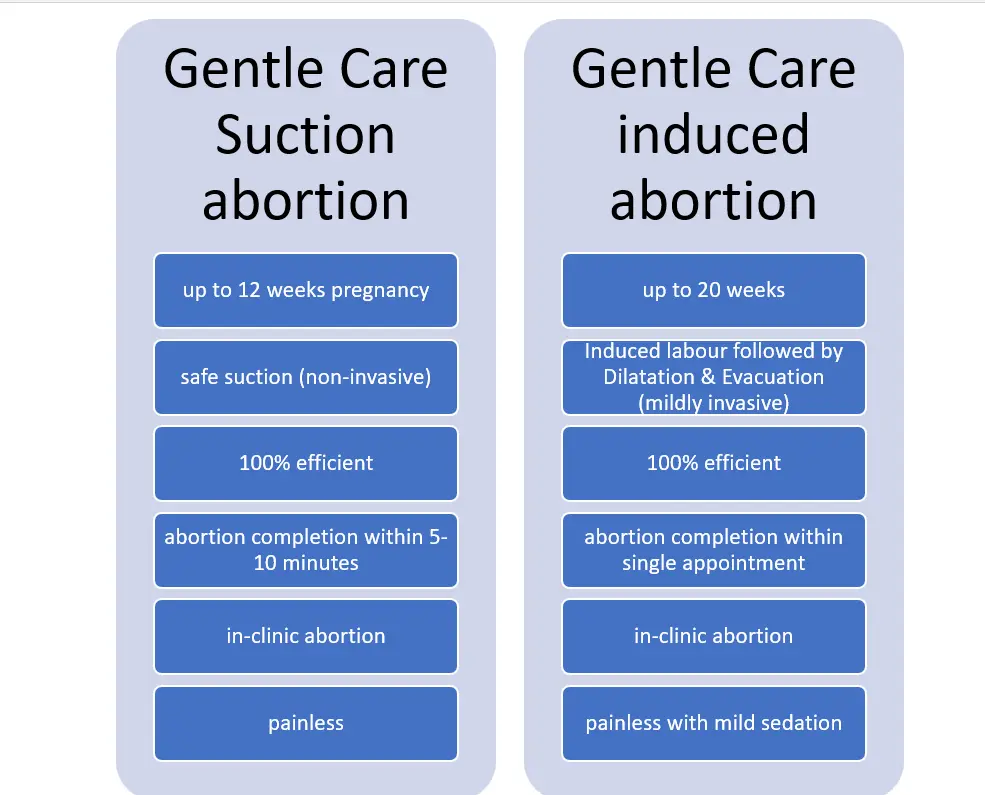
Gentle Care suction abortion is a reliable option up to 12 weeks, allowing women who have crossed the early pregnancy stage to still have a safe and painless abortion.
For pregnancies between 12-20 weeks, a Gentle Care induced abortion (labour induction followed by D&E) is available.
At American Hospital Bangalore (AHB), both Indian and international patients can access this legal, safe, and advanced abortion method with complete privacy and medical support.
Accessing Safe and Legal Abortion at American Hospital Bangalore (AHB)
For women seeking a safe, legal, and stress-free abortion, American Hospital Bangalore (AHB) provides world-class medical care with Gentle Care abortion services. Whether you are an Indian citizen or a foreign national, you can legally access abortion in India under the Medical Termination of Pregnancy (MTP) Act, which allows abortion for various reasons up to 20 weeks of pregnancy.
Why Choose American Hospital Bangalore?
- Legal & Confidential: Abortion in India is legal for both married and unmarried women, and AHB ensures 100% confidentiality for all patients.
- Gentle Care Suction Abortion (Up to 12 Weeks): A painless, single-appointment, and highly effective procedure for early-stage pregnancies.
- Gentle Care Induced Abortion (Up to 20 Weeks): A medically supervised labor induction + D&E procedure for mid-term pregnancies.
- Gentle Care abortion in India
- International Patient Support: Many women travel from UAE, Sri Lanka, Maldives, Oman, and other countries where abortion laws are restrictive. AHB provides complete travel assistance, accommodation guidance, and seamless care.
- Experienced Doctors & Advanced Facilities: AHB is known for its high safety standards, compassionate care, and skilled medical team, ensuring a comfortable and stress-free experience.
- Quick Recovery & No Risk of Incomplete Abortion: Unlike abortion pills, Gentle Care abortion ensures complete pregnancy termination in a single visit, with minimal bleeding and no prolonged discomfort.
If you are considering an abortion and want a safe, painless, and reliable option, Gentle Care suction abortion at AHB provides the best care with immediate results and peace of mind.
To schedule an appointment or discuss your options, contact American Hospital Bangalore today.
Related Posts:
- Associated risks with abortion pills, some Myths and Facts
- What to expect from period after abortion? When to Worry?
- Abortion Success Rates: Comparing Medical vs Suction Methods
- Unwanted Kit Bleeding Time & Cytotec Bleeding Time FAQs
- Abortion Pills in Bangalore – Explained by Experts


Leave a Comment